August 18, 2026
SAVE Is Ending
If you’ve been waiting for the other shoe to drop on the SAVE plan, it’s dropping now — just not all at once, and not on the same day for everyone.
A court order ended SAVE in March 2026. In late March, the Department of Education laid out what would happen next: beginning July 1, federal loan servicers would start notifying borrowers that they had 90 days to move to a different repayment plan. Those notices started going out on schedule, and they’re rolling out in waves that will continue through the end of the year.
Roughly seven million people are in this group. If you’re one of them, here’s what actually matters.
This article is general information, not legal or financial advice for your particular situation. Federal student loan policy is moving quickly; the details here are accurate as of August 18, 2026.
Your clock starts with your letter, not with the calendar
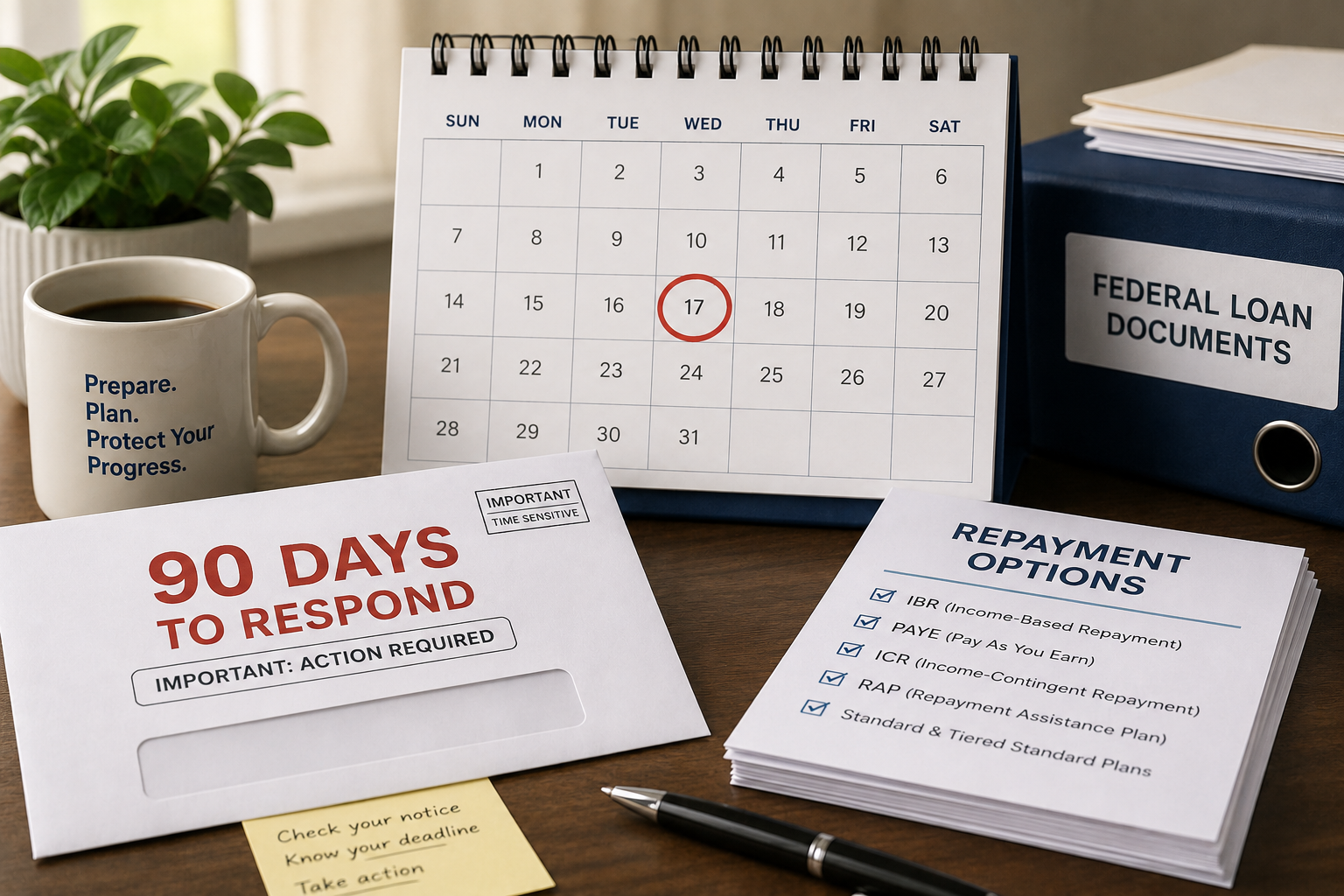
This is the single most common misunderstanding we’re hearing, and it cuts both ways. The 90 days runs from the date on your notice. Not from July 1. Not from when a headline said the transition began. Borrowers in the first wave got notices right around July 1, which puts their deadline in late September. MOHELA has said it’s sending notices from July through October. Nelnet has said its borrowers — around three million of them — will hear by the end of the year. That means some deadlines land this fall and some land well into 2027. So if your friend is panicking about a September deadline and you haven’t received anything, you’re probably not behind. And if you did get a notice in July and you’ve been assuming you have until next year, you don’t. Check the date on the letter. That’s your clock.What happens if you ignore it
You don’t stay on SAVE. You don’t stay in forbearance. You get moved automatically to the Standard Repayment Plan or the new Tiered Standard Plan, depending on your loans. For some borrowers that’s survivable. For anyone who had a low payment or a $0 payment under SAVE — which was a lot of people — it can be a jump of hundreds of dollars a month, arriving with no warning beyond the notice you set aside in July. And the consequences compound. A payment that’s 90 days late generally gets reported to the credit bureaus. At 270 days, a federal loan goes into default, which opens the door to wage garnishment, tax refund offset, and collection costs. None of that is a scare tactic. It’s just what the automatic path looks like if nobody intervenes.The forbearance wasn’t free
While the litigation played out, most SAVE borrowers sat in an administrative forbearance with no payment due. Two things about that period are worth knowing: Interest has been accruing since August 1, 2025. It didn’t stop while you weren’t paying. Those months don’t count toward forgiveness. Not toward IDR forgiveness, not toward PSLF. Time in forbearance is time that didn’t move your count. For borrowers pursuing PSLF, there is a partial remedy — the PSLF Buyback program lets you pay to convert certain forbearance months into qualifying payments. It’s real and it works, but it isn’t fast. Tens of thousands of buyback requests have been sitting in a queue, and processing has been taking well over a year for many people. If buyback is part of your plan, the sooner it’s filed, the better.Your options, briefly
- IBR is the surviving legacy income-driven plan and remains eligible for PSLF. One wrinkle: leaving IBR later causes unpaid interest to capitalize.
- PAYE and ICR are still available to borrowers with older loans, but both sunset in 2028. That makes them a bridge, not a destination.
- RAP — the new Repayment Assistance Plan — opened July 1. It’s PSLF-eligible and has some genuinely useful features, including an interest benefit that keeps balances from growing when you pay on time. But its forgiveness timeline runs thirty years, and the way credit transfers into and out of RAP deserves a careful look before you commit. We wrote about that separately.
- Standard and Tiered Standard are where you land by default. They’re straightforward, and they generally don’t build toward forgiveness.
Two traps worth naming
Switching early ends your no-payment period early. You’re allowed to move off SAVE right now without waiting for a notice — but your forbearance ends when the new plan is processed, not when your 90 days would have expired. If you want the remaining breathing room, don’t rush the application. If you’d rather start building qualifying months again, moving sooner is the point. Consolidating now can close doors. A consolidation processed on or after July 1, 2026 creates a new loan, and that can pull all of your loans into the RAP-or-Tiered-Standard universe and out of reach of the legacy plans. Consolidation is sometimes exactly the right move. It is never a move to make casually in 2026.What we’d like you to do
When your notice arrives, talk to us. We’ll log your actual deadline, look at where your forgiveness count stands, and tell you which plan protects the progress you’ve already made rather than quietly resetting it. If a buyback request makes sense, we’ll discuss that course of action. If nothing needs to change, we’ll tell you that too. The transition itself isn’t optional. Walking into it unprepared is. Have a SAVE notice in hand — or think one is coming? Schedule your complimentary consultation and we’ll take it from there.This article is general information, not legal or financial advice for your particular situation. Federal student loan policy is moving quickly; the details here are accurate as of August 18, 2026.