
July 1, 2026
Will You Owe Taxes on Student Loan Forgiveness? Here’s What IDR Borrowers Need to Know
For years, borrowers working toward Income-Driven Repayment (IDR) forgiveness have heard about the possibility of a "tax bomb" at the end of their repayment journey. Then, during the pandemic, Congress temporarily eliminated federal taxes on most forms of student loan forgiveness, giving many borrowers hope that the tax issue had been resolved for good.
Unfortunately, that tax-free treatment was temporary.
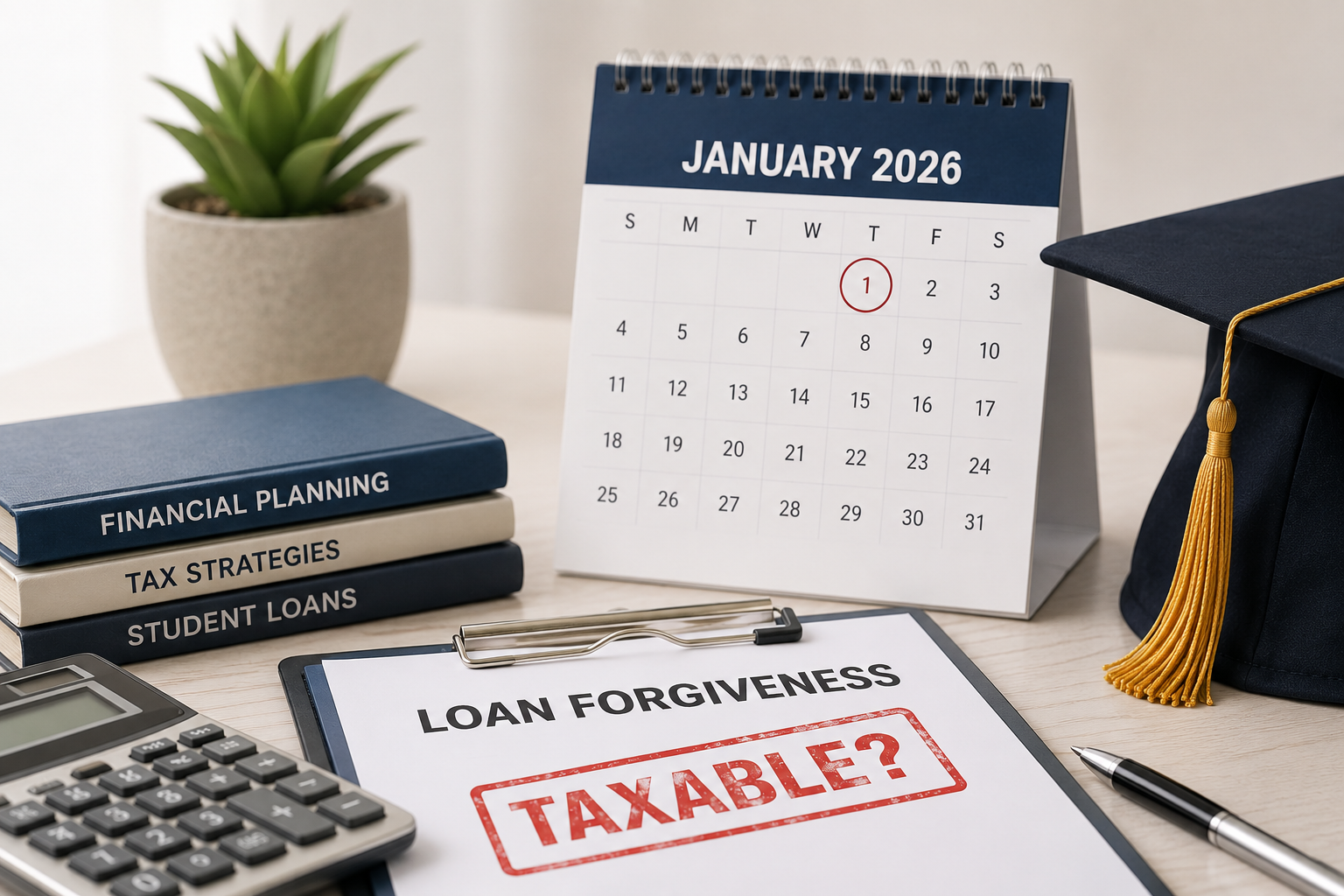
As of January 1, 2026, federal Income-Driven Repayment forgiveness is generally taxable again under current federal law. However, there is one important exception that could make a significant difference for some borrowers whose forgiveness was delayed by processing backlogs.
Why Was Student Loan Forgiveness Tax-Free?
In 2021, Congress passed the American Rescue Plan Act, which temporarily excluded most federal student loan forgiveness from federal taxable income. That provision applied to student loan forgiveness occurring between 2021 and December 31, 2025. Unless Congress acts in the future, forgiveness occurring on or after January 1, 2026 is taxable once again under federal tax rules. Not all forgiveness programs are affected equally. For example, Public Service Loan Forgiveness (PSLF) remains permanently exempt from federal income tax under separate law, as does Total and Permanent Disability (TPD). The change discussed here primarily affects borrowers receiving forgiveness through Income-Driven Repayment (IDR) plans and the Borrower Defense to Repayment program.A Special Exception for Borrowers Affected by Processing Delays
During 2025, many borrowers reached the number of qualifying payments needed for IDR forgiveness but experienced lengthy delays while the Department of Education processed their discharges. Recognizing these delays, the Department of Education announced that borrowers whose effective forgiveness date is December 31, 2025 or earlier will continue to receive the benefit of the temporary tax exemption, even if their loans are not actually discharged until a later date. In other words, the date your forgiveness is effective matters more than the date your account balance actually reaches zero. This distinction may protect thousands of borrowers who completed their repayment obligations before the temporary tax exemption expired.What Happens if Your Forgiveness Date Is in 2026 or Later?
Under current federal law, borrowers whose effective forgiveness date falls on or after January 1, 2026 should generally expect the forgiven balance to be treated as taxable income. If that happens, your loan servicer or the Department of Education will typically issue a Form 1099-C during the following tax season. The amount shown on that form is generally added to your taxable income for the year in which the forgiveness occurred. Depending on the amount forgiven and your overall financial situation, this could increase your federal tax liability.Don't Forget About State Taxes
Federal tax treatment is only part of the picture. Some states automatically follow federal tax law, while others have their own rules regarding forgiven student loan debt. As a result, your state tax treatment may differ from your federal tax treatment. Because these rules vary by state and can change over time, it is important to understand how the laws apply where you file your taxes.What Should Borrowers Do Now?
If you are approaching IDR forgiveness, now is a good time to review your account and understand where you stand. Consider taking these steps:- Confirm your qualifying payment count with your loan servicer.
- Verify your expected effective forgiveness date.
- Save copies of correspondence related to your forgiveness.
- Watch for any tax documents, including Form 1099-C, after your discharge is processed.
- Consult a qualified tax professional if you have questions about your individual tax situation.
The Bottom Line
For many borrowers, Income-Driven Repayment forgiveness remains one of the most valuable federal student loan benefits available. However, the tax consequences can vary depending on when your forgiveness becomes effective, especially during this transition period. While borrowers with an effective forgiveness date on or before December 31, 2025 are expected to remain protected under the temporary federal tax exemption, borrowers reaching forgiveness after that date will face different tax treatment under current law. Because both repayment rules and tax guidance continue to evolve, staying informed and seeking professional guidance when needed can help you make confident decisions about your student loans.Recent Posts

tslhg-admin
What’s Actually Happening With SAVE Right Now?

tslhg-admin
