
September 14, 2026
What’s Actually Happening With SAVE Right Now?
If the latest SAVE headlines have you wondering whether you need to do something right now, start here:
Your timeline may not be the same as everyone else’s.
SAVE has ended, but millions of borrowers aren’t moving to a new repayment plan all at once. Notices are going out in waves, and your individual notice determines when you need to make a decision.
Here’s where things stand.
Your SAVE deadline starts with your notice
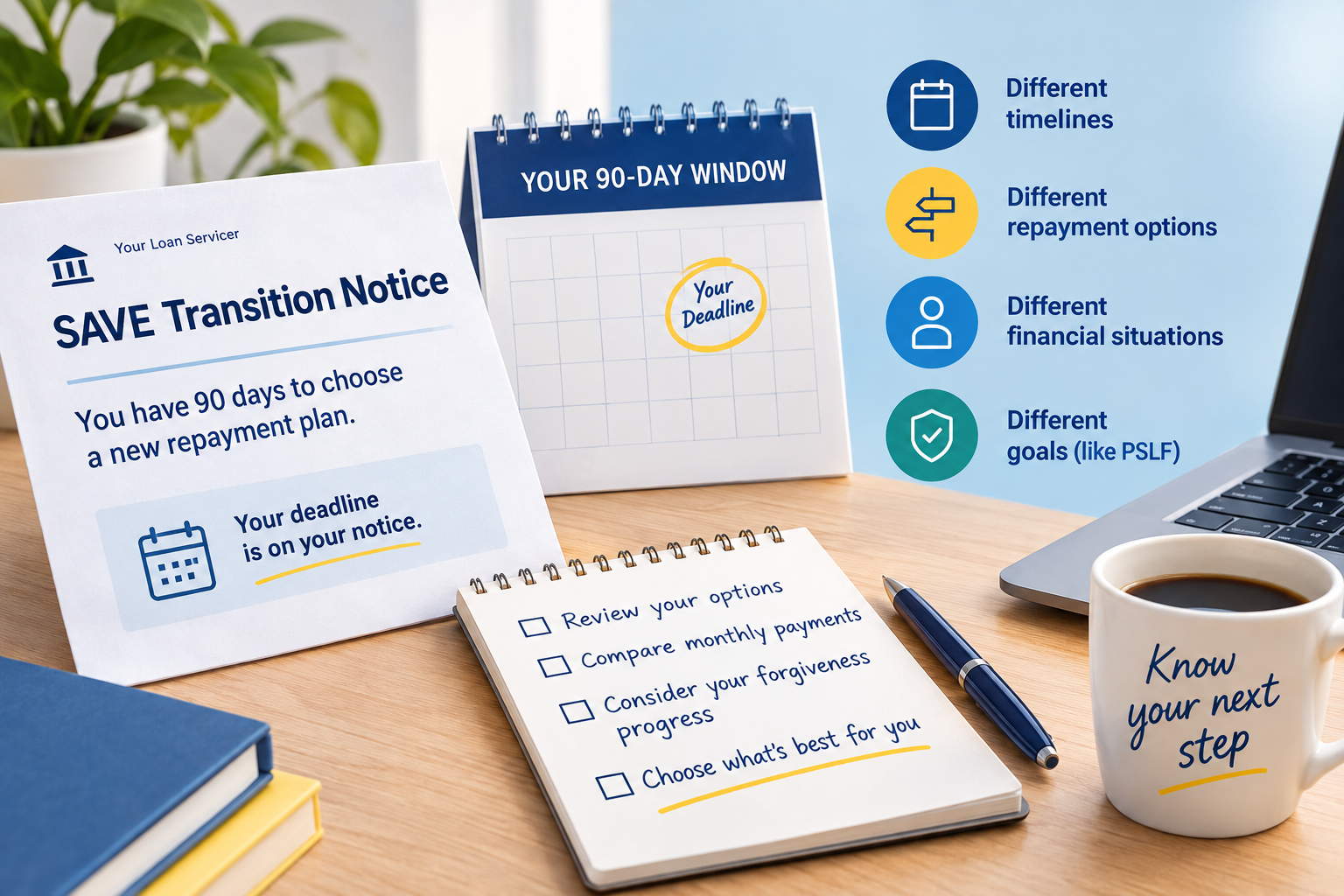
Once your servicer sends your SAVE transition notice, you generally have 90 days to choose a new repayment plan. That means the deadline you see online, hear from a friend, or spot in a headline may not be your deadline. The date on your notice is what matters. Servicers are sending these notices in waves. For example, MOHELA says its notices are being sent from July through October 2026. If you want a deeper look at how the transition began and what borrowers were originally told, we broke that down in our earlier update, SAVE Is Ending.What happens if you don’t choose a new plan?
If your 90-day window expires without a selection, you won’t simply stay on SAVE. Borrowers may be moved automatically to the Standard Repayment Plan or the new Tiered Standard Plan, depending on their loan history. For someone who had a low or $0 SAVE payment, that could mean a very different monthly payment. But here’s the bigger point: Automatic doesn’t mean best for you. Your income, loan balance, repayment history, forgiveness progress, and even when your loans were issued can affect which option makes the most sense. Federal Student Aid’s Repayment Calculator can help you compare the plans currently available to you. And if you’re pursuing Public Service Loan Forgiveness, repayment-plan choice matters even more. We recently broke down the current requirements in PSLF Payment Rules in 2026.What about the SAVE lawsuit?
There’s still a pending legal challenge worth watching. Havens v. U.S. Department of Education challenges how the Department handled the older REPAYE plan after SAVE ended. The case was filed in March, and briefing continued through August. You can follow the federal case docket here. Could the case change part of the picture? Possibly. But it hasn’t yet. Watch the case. Don’t build your repayment strategy around an outcome that hasn’t happened. Until official guidance changes, the deadlines and repayment options currently in place still matter.Why does everything feel so messy?
Because SAVE isn’t the only thing moving. PSLF counts have changed for some borrowers. Repayment rules have shifted. Servicers and federal systems haven’t always displayed the same information at the same time. If your PSLF count recently dropped, we’ve already broken down what we know about the count changes and what to do next. When all of these changes happen at once, every new headline can feel urgent. Most aren’t. The goal isn’t to react to everything. It’s to know which changes actually affect your loans.So, what should you do now?
Start with your notice, your deadline, and your bigger plan. Know when your 90-day window ends. Understand the repayment options available to you. And before switching plans, look at how that decision could affect your monthly payment and any progress you’ve already made toward forgiveness. If you’re a TSLHG client, you don’t need to follow every headline yourself. We’re watching the changes and helping our clients understand the ones that actually matter to their situation. Because right now, knowing what not to react to can be just as important as knowing when to act.This article is for general informational purposes only and isn’t legal or financial advice for your individual situation. The Student Loan Help Group is a private company and is not affiliated with or endorsed by the U.S. Department of Education. Federal student loan rules can change quickly. Information is current as of September 13, 2026.
Recent Posts

tslhg-admin
What’s Actually Happening With SAVE Right Now?

tslhg-admin
Your Forgiveness Count Changed

tslhg-admin
