

April 10, 2025
New Year, New Twists: Student Loan Changes in the First Quarter of 2025
With any change in administration, discussion and debate naturally arise about policy changes and their impact. The shift from the Biden to Trump administration is no different. Student loan borrowers feel this change acutely. Many are asking: How did we get here? What should we focus on? How should we prepare?
In the first three months of 2025, several major developments have already affected borrowers.
The Department of Education’s Future
On March 20, President Trump signed an executive order instructing the Secretary of Education to “take all necessary steps to facilitate the closure of the Department of Education and return authority over education to the States.” However, closing the Department would require an act of Congress and at least 60 votes in the Senate. Notably, a 2023 congressional vote on a proposal to eliminate the Department of Education failed to pass, even in a Republican-controlled House of Representatives. Since congressional action to abolish the Department is unlikely, the Trump administration has pursued another approach: reducing staff. On March 12, over 1,300 Department of Education employees were fired. This left just over 2,100 employees, down from more than 4,100 at the start of 2025. Discussions are also underway about moving some Department functions to other federal agencies. One possibility is relocating the Office of Federal Student Aid, which manages federal student loans. Early reports suggest that the student aid responsibilities may move to the Small Business Administration (SBA). However, it is unclear if they can handle a trillion-dollar portfolio. The SBA has announced plans to cut nearly 43% of its staff. Whether the Department of Education is dismantled or the Office of Federal Student Aid responsibilities are transferred, borrowers’ student loans are not disappearing!The Future of Forgiveness Programs
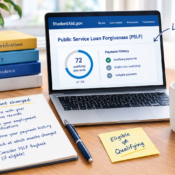
Programs like Public Service Loan Forgiveness (PSLF) and Income-Driven Repayment Forgiveness (IDRF) have operated for decades. They are unlikely to disappear. PSLF, created in 2007, enjoys bipartisan support. IDRF has existed since 1994. Eliminating these programs would require congressional approval, just like abolishing the Department itself. While potential restructuring at the Department of Education may bring changes, borrowers pursuing forgiveness programs can stay on track with the proper guidance. Any significant adjustments would take time to implement, and existing commitments to borrowers are likely to be upheld, particularly for programs created by Congress like PSLF, Teacher Loan Forgiveness (TLF), or IDR forgiveness via the Income-Based Repayment (IBR) plan.The State of SAVE and Other Income-Driven Repayment Plans
The SAVE income-driven repayment plan remains blocked due to ongoing legal challenges. On February 18, the 8th Circuit Court of Appeals upheld a preliminary injunction. The court ruled the Department exceeded its authority in implementing SAVE. This decision leaves about 8 million borrowers in the plan uncertain about their repayment options. It is likely that SAVE will ultimately be removed. However, other income-driven plans, like IBR, remain available. IBR, created under the College Cost Reduction and Access Act of 2007, cannot be eliminated without another act of Congress. In response to the court’s ruling, the Department of Education removed applications for all income-driven repayment (IDR) plans from its website, including those not directly implicated in the litigation. The Department also directed servicers to temporarily suspend processing of IDR plan applications. This suspension drew criticism from various stakeholders, and the American Federation of Teachers filed a lawsuit against the Department, alleging that halting these programs violates federal law and leaves millions of borrowers without access to affordable repayment options. In response to that suit, the Department of Education restored access to the IDR applications on March 26. While the processing of IDR applications remains paused for now, it is expected to resume shortly.Borrowers Seeing Massive Drops in Credit Scores
Since the onset of the COVID-19 pandemic, federal student loan borrowers have benefited from relief measures like the CARES Act, which suspended payments and shielded borrowers from negative credit reporting. Additionally, the Department of Education implemented a 12-month “on-ramp” period ending on September 30, 2024, during which missed, late, or partial payments were not reported. Starting January 2025, the Department began reporting delinquent federal loans to national credit bureaus. Missing payments for 90 days or more now affects credit scores. Some borrowers have seen drops of nearly 200 points. The Federal Reserve estimated that over nine million borrowers were at least 90 days behind as of late March. Missing 270 days, or roughly nine months, leads to default. Default carries serious consequences, including potential wage garnishment and tax refund offsets. The greatest mistake student loan borrowers can make is doing nothing. Taking advantage of forgiveness programs and repayment as they currently stand can ensure you are “grandfathered” into the program as it currently stands, while waiting too long can put your eligibility in jeopardy. Be sure to seek expert guidance and create a clear path to managing your student loan debt.Recent Posts

tslhg-admin
What’s Actually Happening With SAVE Right Now?

tslhg-admin
